Leica IIIc
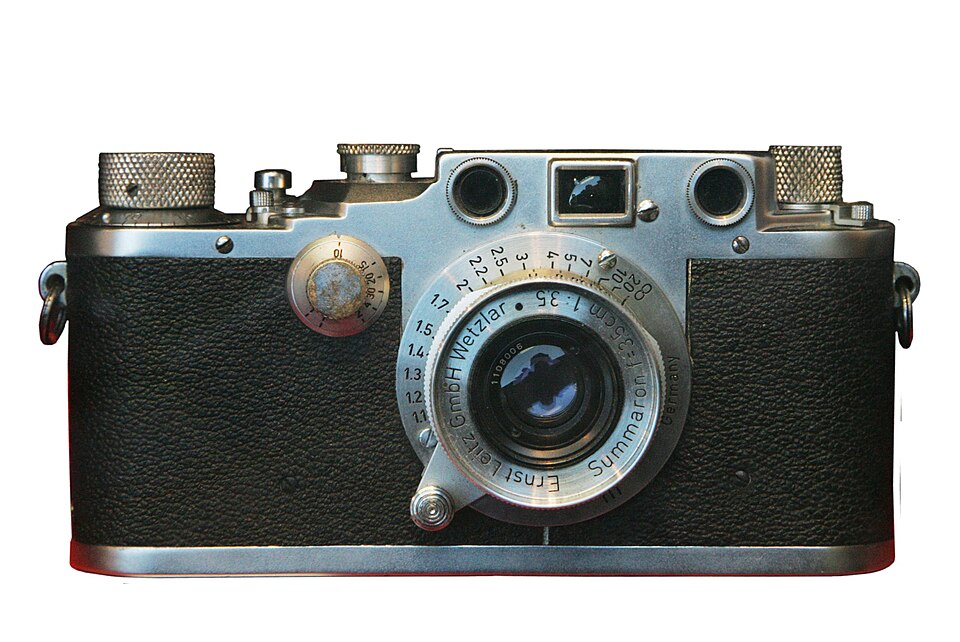
Before the IIIc, Leica bodies were machined from brass — painstaking, expensive, and slow. The IIIc (1940) switched to die-cast zinc alloy: molten metal forced into precise moulds, then machined to tolerance. The result looked similar on the outside but was produced faster and more uniformly at scale. It also coincided with wartime production demands, and many IIIc units were made for the German military.
For collectors, the IIIc spans a remarkable period: civilian pre-war cameras, wartime grey and black-paint military versions, and post-war civilian production through 1951. The body type was carried forward into the IIId and IIIf (already in the timeline), making the IIIc the root of the most-produced Barnack family.
Key specs
- body
- die-cast zinc alloy (first Leica)
- shutter
- cloth focal plane, 1/1000s max
- mount
- M39 screw
- sync
- none standard; some postwar units have flash sync
- produced
- 1940–1951, ~27,000 units
Variants & finishes
IIIc bodies made 1940–45 under wartime conditions at the Wetzlar factory; identifiable by the stepped film-rewind platform. Build quality varies — some were rushed, others are fine shooters.

Postwar IIIc production returned to peacetime standards. Mechanically the same as wartime bodies but with more consistent finishing; these are the safer used-market choice for shooters.
Photographs made with this equipment1

Market value
Used-market price (USD, estimated median)
Estimates from auction and dealer records — condition and completeness vary.
View data
| Date | Price | Source | Condition |
|---|---|---|---|
| 2016-01 | $180 | Dealer Median | Good |
| 2020-01 | $260 | Dealer Median | Good |
| 2026-01 | $350 | Dealer Median | Good |
Comments
No comments yet — be the first.