Leica M EV1
✦ NotableThe M EV1 marks the end of the unbroken optical rangefinder lineage that defines the M system since 1954. Whether this is evolution or revolution, it is the most consequential M body announcement in a generation.
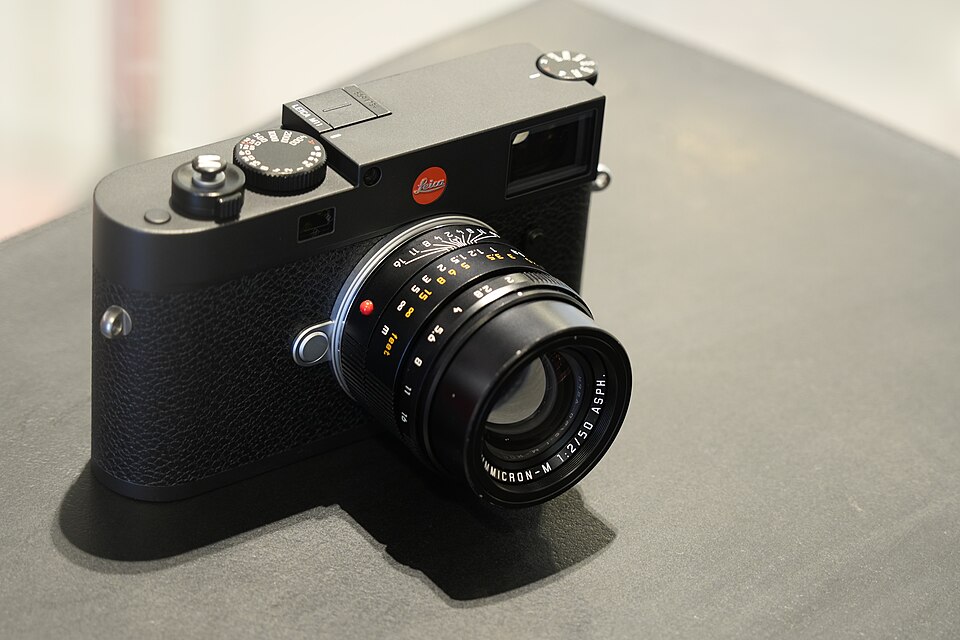
The Leica M EV1, announced in 2025, is perhaps the most significant M body since the M3 introduced the bayonet mount in 1954. For the first time in the M line's history, an M body ships with a built-in electronic viewfinder instead of — or in addition to — the traditional optical rangefinder. Every M body from the M3 in 1954 through the M11-D in 2024 used an optical rangefinder: a glass window, a patch, and a mechanical coupling to the lens. The M EV1 breaks with this tradition.
For Leica enthusiasts and historians: this is genuinely controversial and genuinely significant. The optical rangefinder is the defining characteristic of the M system — the reason M cameras handle and focus the way they do, the reason the lenses are designed the way they are, the reason the shooting experience is what it is. An electronic viewfinder fundamentally changes that experience. Leica is arguing that an EVF can serve the same purpose — silent, deliberate, precise — while adding capabilities (magnified focus peaking, live exposure preview, lens correction) that an optical system cannot provide. Whether the M EV1 is a betrayal of the M legacy or a necessary evolution is a debate the Leica community will have for years.
Key specs
- type
- full-frame digital M with integrated EVF
- viewfinder
- built-in electronic viewfinder (EVF)
- mount
- Leica M
- sensor
- to be confirmed
- significance
- first M body without optical rangefinder in 70+ year history
Variants & finishes
The M Everest Edition — a limited collaboration body in black anodized aluminum. Collectible rather than a standard purchase; mechanically identical to the standard M11 platform.
Market value
Used-market price (USD, estimated median)
Estimates from auction and dealer records — condition and completeness vary.
View data
| Date | Price | Source | Condition |
|---|---|---|---|
| 2025-01 | $7,995 | Leica MSRP | New |
| 2026-01 | $7,995 | Leica MSRP | New |
Source: https://leica-camera.com/en-US/photography/cameras/m
Comments
No comments yet — be the first.