Summicron 50mm f/2 Rigid
✦ NotableThe standard rigid-barrel Summicron 50mm that defined the M system's normal lens from 1956 to 1968. Sharp, robust, affordable, and still a beloved everyday shooter.
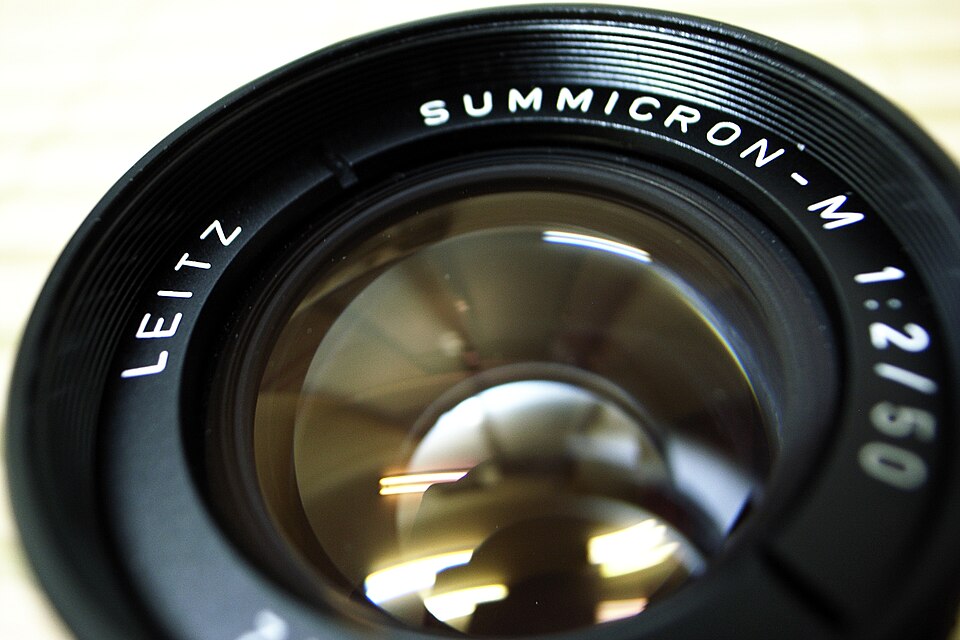
Famous for
- The rigid Summicron 50 that became the benchmark for 50mm performance for two decades
- Arguably the most used Leica lens of the 1960s–70s by working photojournalists
Where the collapsible Summicron was compact, the Rigid was built to last. Leitz stiffened the barrel, eliminated the collapse mechanism, and used the freed-up space to refine the optical formula. The result is a lens that is noticeably sharper toward the edges of the frame than its predecessor, with less field curvature — a better all-round tool even if a fraction less pocketable.
For beginners: the Rigid is the lens most recommended as a first classic M lens for good reason. It is common enough that prices are reasonable, robust enough that worn examples still work fine, and optically excellent enough to compete with modern lenses stopped down to f/4. The rendering has a subtle warmth and three-dimensionality that practitioners describe as "organic" — not clinical, but not fuzzy either. It bridges the barnack-era softness and the austere modernity of later designs.
Key specs
- elements groups
- 7/5
- minimum focus
- 1m
- filter size
- 39mm
Variants & finishes
Fixed-barrel 50mm f/2 that replaced the collapsible Summicron — faster to deploy and more robust. The standard 50mm choice for M2/M3 shooters of the era.

Clever variant that focuses down to 0.48m (about 19 inches) using a built-in cam and clip-on goggles that project a close-focus frameline into the viewfinder. Rare, quirky, and beloved by close-up rangefinder fans.

Photographs made with this equipment1

Market value
Used-market price (USD, estimated median)
Estimates from auction and dealer records — condition and completeness vary.
View data
| Date | Price | Source | Condition |
|---|---|---|---|
| 2016-01 | $650 | Rigid Benchmark | Good |
| 2020-01 | $1,050 | Rigid Benchmark | Good |
| 2026-01 | $1,400 | Rigid Benchmark | Good |
Comments
No comments yet — be the first.