Leica SL (Typ 601)
✦ NotableThe SL (Typ 601) established the L-mount and launched Leica into full-frame mirrorless photography. The L-Mount Alliance it seeded — bringing in Panasonic and Sigma — gave the mount an ecosystem breadth no manufacturer could build alone.
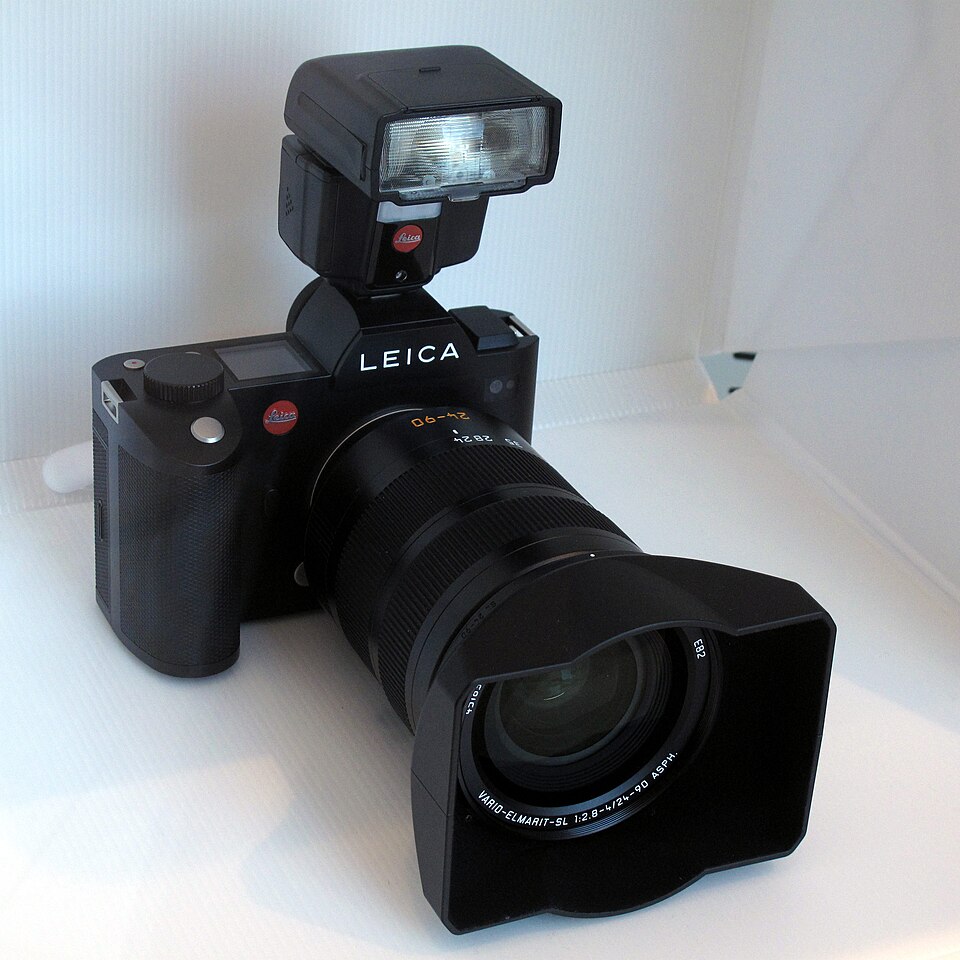
Famous for
- Leica's first mirrorless interchangeable-lens camera — the T-mount system that became the SL mount
- Defined the modern Leica mirrorless aesthetic with its CNC-milled unibody aluminum design
The Leica SL (Typ 601), introduced in October 2015, was Leica's entry into full-frame mirrorless photography and the first camera to use what would become the L-mount — the bayonet now shared with Panasonic and Sigma through the L-Mount Alliance (formed 2018). It was a large, robust, weather-sealed body with a 24MP CMOS sensor and an outstanding electronic viewfinder that set a new standard at introduction.
The SL was positioned as a professional system camera, not a rangefinder alternative. It accepted native SL lenses (large, optically excellent, and expensive), M-mount lenses via adapter, and eventually L-mount lenses from all alliance partners. For Leica, the SL represented a strategic diversification: a camera that could compete with the Nikon D800 or Sony A7R for photographers who wanted Leica quality without rangefinder shooting. The SL2 (2019) and SL2-S (2020) continue the line.
Key specs
- type
- full-frame mirrorless
- mount
- Leica L
- sensor
- 24MP CMOS, 24×36mm
- viewfinder
- 4.4MP EVF
- weather sealing
- yes (IP54)
- shutter
- metal focal-plane, 30s–1/8000 + electronic
Variants & finishes
The original SL (Typ 601) in black — Leica's first mirrorless L-mount camera, launched 2015. Large ergonomic body optimized for manual-focus M and R lenses via adapters; the foundation of the current SL system.
Market value
Used-market price (USD, estimated median)
Estimates from auction and dealer records — condition and completeness vary.
View data
| Date | Price | Source | Condition |
|---|---|---|---|
| 2015-01 | $7,450 | Leica MSRP | New |
| 2018-01 | $3,800 | Dealer Median | Mint |
| 2022-01 | $2,000 | Dealer Median | Good |
| 2026-01 | $1,400 | Dealer Median | Good |
Comments
No comments yet — be the first.