Ur-Leica
Iconic CameraKnown as "Original Leica", "Lilliput"
The first practical 35mm still camera — the origin point of the format, the company, and this chronicle.
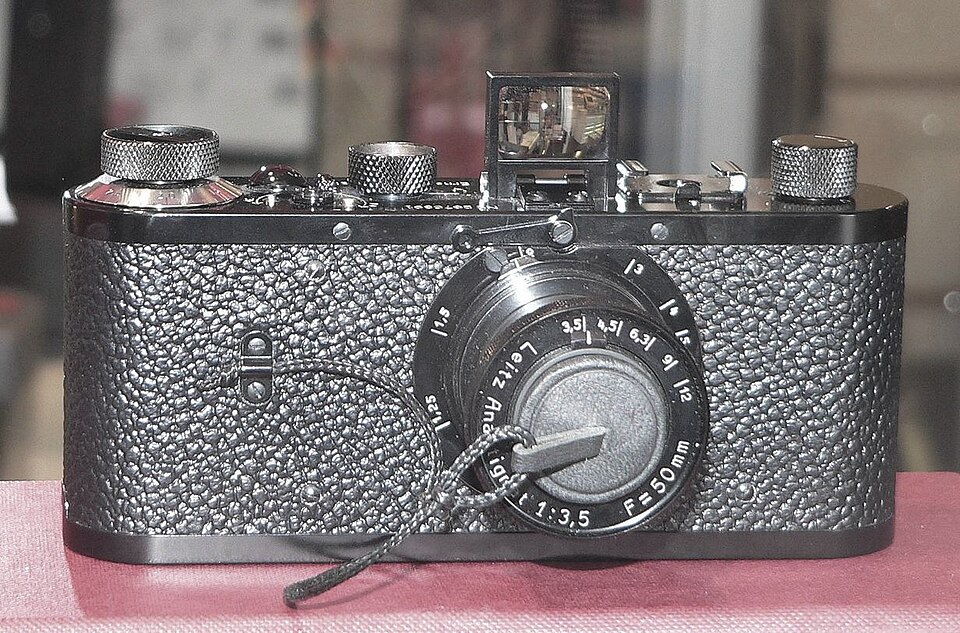
Two or three prototypes were built by Oskar Barnack at Ernst Leitz Wetzlar in 1914 — a pocketable metal box exposing 24×36mm frames on cinema film, with a collapsing lens and a cloth shutter. Barnack called it his Lilliput camera; history named it the Ur-Leica ("original Leica").
World War I delayed everything. The concept resurfaced as the 0-Series trial batch in 1923 and reached the market as the Leica I in 1925. The surviving original is displayed at Leitz Park in Wetzlar and is arguably the single most important artifact in photographic history — it has no order code because it predates the very idea of a Leica catalogue.
For newcomers: when the timeline's 1914 event says Barnack "built the Ur-Leica", this is the machine it means.
Key specs
- type
- prototype 35mm still camera
- frame
- 24×36mm on cine film
- built
- 2-3 units, 1914
- location
- original at Leitz Park, Wetzlar
Market value
Used-market price (USD, estimated median)
Estimates from auction and dealer records — condition and completeness vary.
View data
| Date | Price | Source | Condition |
|---|---|---|---|
| 2016-01 | $600 | Replica Index | Mint |
| 2020-01 | $900 | Replica Index | Mint |
| 2026-01 | $1,200 | Replica Index | Mint |
Comments
No comments yet — be the first.